
Shaanxi boasts a long and profound history, and its ethnic culture is renowned far and wide. It is one of the important birthplaces of ancient Chinese humans and the Chinese nation's culture, the first place where the historical civilization of the Chinese nation spread to the world, and also a sacred place of China's modern revolutionary movement. It has made unique contributions to the survival and reproduction of the Chinese people (descendants of Yan and Huang) and the development of human historical civilization.
Xi'an is the capital city of Shaanxi Province. This city had many names in history, among which "Chang'an" is the most famous. Though the names have changed, they all refer to the same great city. With a long history, Xi'an has a civilization history of over 7,000 years, a city-founding history of more than 3,100 years, and a capital-founding history of over 1,100 years. It is one of the four major ancient capitals of China. Exploring Xi'an invites you to travel through time, experience the past and present of this city, and appreciate the charm and style of the ancient capital Xi'an.
Itinerary
One-Day Tour to Huashan Mountain
Huashan Mountain: Formerly known as "Xiyue" (Western Yue) and also respectfully called "Taihuashan Mountain", it is one of the Five Great Mountains of China. Located in Huayin City, Weinan, Shaanxi Province, it is 120 kilometers east of Xi'an. Adjacent to the Qinling Mountains in the south and overlooking the Yellow River and Weihe River in the north, it has long been known as "the most perilous mountain in the world". As one of the top ten famous mountains in China, Huashan Mountain is a sacred site of the Quanzhen School (the mainstream of Taoism) and is regarded as the "Fourth Grotto-Heaven". It is also a widely worshipped deity in Chinese folk culture, namely the God of Huashan Mountain (Xiyue Huashan Jun). Huashan Mountain has five peaks: East, South, West, North, and Middle. The North Peak is the lowest, with an altitude of 1,614 meters; the South Peak is the highest, at an altitude of 2,161 meters; and the West Peak is the most perilous. The East Peak is the best place to watch the sunrise. Currently, there are two cableways: the North Peak Cableway and the West Peak Cableway.
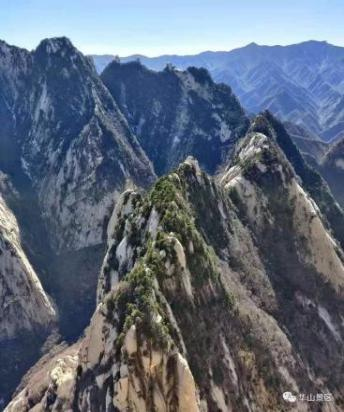
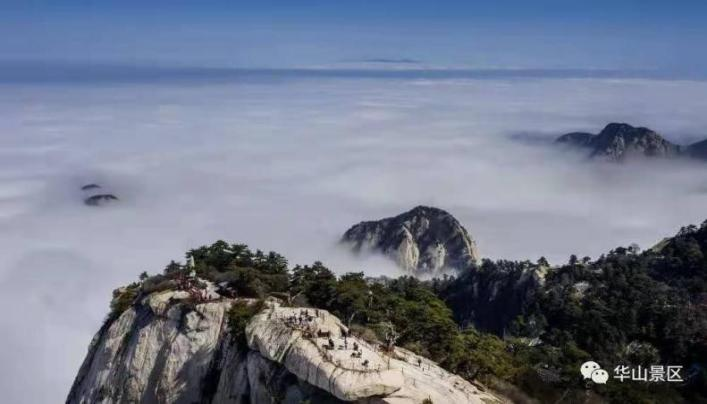
Travel Route: Hotel - Huashan Mountain - Hotel
07:30 - 09:30: Take a bus to Huashan Mountain.
09:30 - 10:30: Take a shuttle bus in Huashan Scenic Area to the lower station of the West Peak Cableway.
10:30 - 11:20: Take the West Peak Cableway to the upper station (West Peak Scenic Area of Huashan Mountain).
11:30 - 15:30: Hike to visit the peaks of Huashan Mountain. Huashan Mountain has five peaks. The highest South Peak is 2,160 meters above sea level, and the lowest North Peak is 1,614 meters above sea level. The West Peak is the most perilous, and the East Peak is the best spot for watching the sunrise, while the Middle Peak is in the middle. You can choose the hiking route according to your pysical strength. (Note: Huashan Mountain is famous for its perilous terrain. Do not enjoy the scenery while walking, and do not walk while enjoying the scenery.)
15:30 - 16:10: Take the West Peak Cableway down the mountain.
16:10 - 17:00: Take the scenic area shuttle bus to the parking lot.
17:00 - 19:00: Take a bus back to the hotel.
Service Standards
1. Transportation: Air-conditioned tourist bus for the entire journey.
2. Tickets: Entrance ticket to Huashan Scenic Area, round-trip ticket for the West Peak Cableway, and round-trip fare for the in-scenic shuttle bus.
3. Tour Guide Service: Professional tour guide service (the tour guide will send tourists to the cableway station and will not accompany them to climb the mountain).
4. Insurance: Travel agency liability insurance and personal accident insurance for tourism.
5. Meals: No meals are included throughout the day. There are no conditions for arranging group meals on the mountain, so tourists are requested to bring their own food on that day. If group meals are required, they can be arranged at the foot of the mountain before climbing up or after going down.
6. Complimentary Item: Mineral water.
Personal Quotation: 820 yuan per person (this quotation is calculated based on a group of 10 people).
Email:ouqijun@snnu.edu.cn
One-Day City Tour in Xi'an
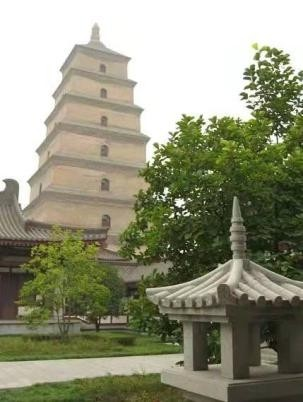
Giant Wild Goose Pagoda (in Daci'en Temple): As one of the landmark buildings of the ancient capital Xi'an, the Giant Wild Goose Pagoda is located in Daci'en Temple of the Tang Dynasty's Chang'an City, also known as "Daci'en Temple Pagoda". Daci'en Temple was an imperial temple of the Tang Dynasty and the ancestral court of the Faxiang Sect of Buddhism. In the Tang Dynasty, the Giant Wild Goose Pagoda was built under the supervision of Monk Xuanzang to preserve the Buddhist scriptures and statues he brought back to Chang'an from Tianzhu (ancient India). With seven stories, the Giant Wild Goose Pagoda is the earliest and largest existing square pavilion-style brick pagoda of the Tang Dynasty. It is a typical evidence of the introduction of ancient Indian Buddhism into the Central Plains and its integration into Chinese culture, and a landmark building that embodies the wisdom of the working people in ancient China.

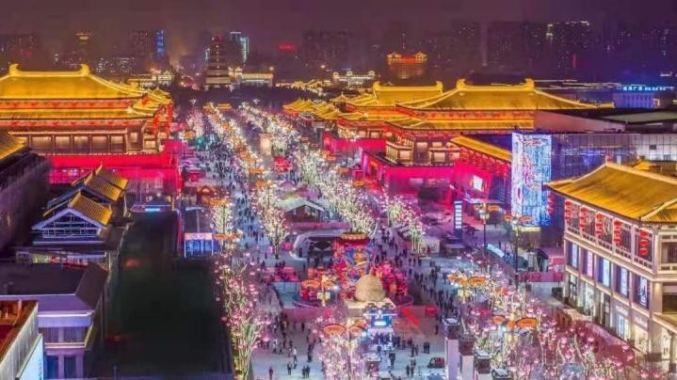
Datang Ever-Bright City: As one of the newly popular "check-in spots" in Xi'an, Datang Ever-Bright City is located at the foot of the Giant Wild Goose Pagoda and is included in the first batch of national model pedestrian streets. With the culture of the prosperous Tang Dynasty as the background and Tang-style elements as the main line, Datang Ever-Bright City has four squares (North Square of the Giant Wild Goose Pagoda, Xuanzang Square, Zhenguan Square, and the Square of Forging Ahead in the New Era), four cultural venues (Xi'an Concert Hall, Shaanxi Grand Theater, Xi'an Art Museum, and Qujiang Pacific Cinema), and five cultural sculptures (Datang Buddhist Culture Sculpture, Datang Heroes Gallery Sculpture, Zhenguan Governance Sculpture, Empress Wu's Procession Sculpture, and Kaiyuan Prosperity Sculpture). It is the first choice for displaying and experiencing the Tang Dynasty culture in Xi'an.
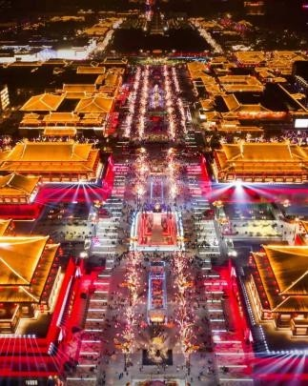
The City Wall:The City Wall of Xi'an is one of the largest and best-preserved ancient city walls extant in China. It is a national key cultural relic protection unit (among the first batch), a national AAAAA-level tourist attraction, and also the only city wall structure among the first batch of national key cultural relic protection units.
In a broad sense, the City Wall of Xi'an includes the Tang Dynasty City Wall of Xi'an and the Ming Dynasty City Wall of Xi'an, but it generally refers specifically to the Ming Dynasty City Wall of Xi'an in a narrow sense.
The Ming Dynasty City Wall of Xi'an is located in the central area of Xi'an City, Shaanxi Province. It stands 12 meters high, with a top width of 12 to 14 meters and a base width of 15 to 18 meters. Its outline forms a closed rectangle, with a circumference of 13.74 kilometers. The area inside the city wall is commonly known as the "Ancient City Area", covering an area of 11.32 square kilometers. The famous Bell and Drum Towers of Xi'an are located in the center of this Ancient City Area.
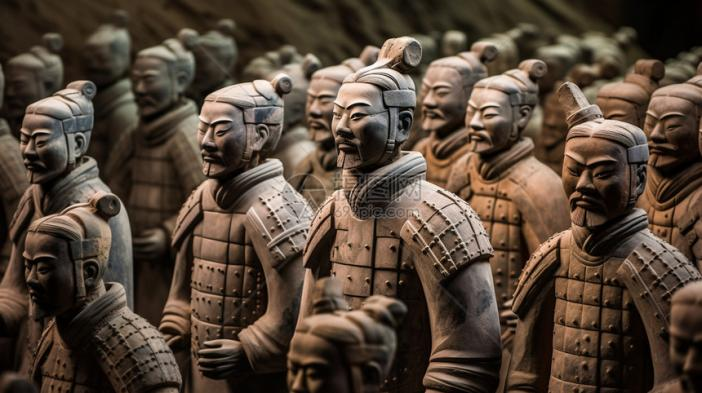
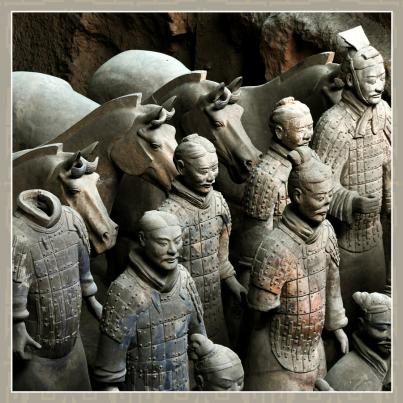
Terracotta Army: The Terracotta Army, also known as the Qin Terracotta Army or Qin Figurines, is a category of ancient tomb sculptures. It is located in the Terracotta Army Pits, 1.5 kilometers east of the Mausoleum of Qin Shi Huang in Lintong District, Xi'an City, Shaanxi Province. It is one of the first batch of national key cultural relics protection units and the first batch of World Heritage Sites in China, and is known as "the Eighth Wonder of the World". The Terracotta Army are funeral objects made in the shape of soldiers and horses (chariots, war horses, and soldiers). As one of the ten rare treasures in ancient tombs around the world, it has been included in the World Heritage List. In December 2024, archaeologists discovered a rare high-ranking military official figurine in the No. 2 Pit of the Qin Terracotta Army, which is the first high-ranking military official figurine unearthed since the official excavation of the No. 2 Pit in 1994. By December 2024, archaeologists had successively discovered the No. 1, No. 2, and No. 3 Pits of the Qin Terracotta Army, covering a total area of over 20,000 square meters, and more than 2,000 terracotta figures and horses have been unearthed.
Travel Route: Hotel - Terracotta Army - Ming City Wall - Giant Wild Goose Pagoda - Datang Ever-Bright City - Hotel
08:00 - 09:00: Depart by bus.
09:00 - 12:00: Visit the [Terracotta Army].
12:00 - 13:00: Lunch.
13:00 - 14:00: Take a bus back to the urban area.
14:00 -15:30: Climb the [Ming City Wall], the best-preserved ancient military fortress facility in China.
15:30- 17:00: Visit the [Giant Wild Goose Pagoda (in Daci'en Temple)] - the landmark building of Xi'an, the most famous imperial temple of the Tang Dynasty, and the ancestral court of the Faxiang Sect (one of the eight major Buddhist sects in the Central Plains). (Note: The fee for climbing the pagoda is at the tourist's own expense.)
17:00 - 18:30: Tour Datang Ever-Bright City, a popular "check-in spot" in Xi'an.
18:30 - 19:30: Take a bus back to the hotel.
Service Standards
1. Transportation: Air-conditioned tourist bus for the entire journey.
2. Tour Guide Service: Professional tour guide service.
3. Tickets: Entrance tickets to Hanyang Mausoleum, Ming City Wall, and Giant Wild Goose Pagoda (in Daci'en Temple) (the fee for climbing the pagoda is at the tourist's own expense).
4. Insurance: Travel agency liability insurance and personal accident insurance for tourism.
5. Meals: One Chinese lunch (50 yuan per person per meal).
6. Equipment: Headphones for all tourists throughout the day.
7. Complimentary Item: Mineral water.
Personal Quotation: 550 yuan per person (this quotation is calculated based on a group of 10 people)
Email:ouqijun@snnu.edu.cn